 Auth & Identity
Passport
Simple, unobtrusive authentication middleware for Node.js.
- Status
- UnmaintainedNo commits in 739 days.
- Last checked
- Checked · Oct 10, 2026
- License
- Open source
- Pricing
- Free tier · from $0
What it is
Passport is a simple and unobtrusive authentication middleware for Node.js applications. It provides a flexible and modular way to handle user authentication without cluttering your application code.
Passport stands out with its modular design and extensive plugin ecosystem, making it highly flexible for various authentication needs in Node.js applications.
When it fits — and when it doesn’t
A good fit for
Developers building Node.js apps who need a flexible and modular authentication solution
Teams that require integration with multiple OAuth providers
Projects needing custom authentication methods without cluttering the main application code
Look elsewhere if
Applications requiring real-time user session management beyond basic authentication
Projects looking for a fully managed authentication service (e.g., Auth0, Firebase)
Known weaknesses
Each one links to the public issue, changelog or docs page it came from, where we have one.
- 01
Steep learning curve for new users
The extensive plugin ecosystem and modular design can be overwhelming for developers unfamiliar with the framework.
- 02
Limited official documentation
While there are examples, detailed explanations of how to use Passport effectively in complex scenarios are lacking.
- 03
Vendor lock-in concerns
Passport's design is tightly coupled with Node.js and its ecosystem, making it difficult to migrate authentication logic to other platforms or languages.
- 04
Performance overhead in large-scale applications
The middleware can introduce performance bottlenecks when handling a high volume of concurrent authentication requests.
What it does well
Flexible authentication strategies
Unobtrusive middleware design
Extensive plugin ecosystem for various authentication methods
Pricing
- Free tier
- YesOpen source — free to use
- Paid from
- $0
- Model
- Flat rate
- Enterprise plan
- No
Pricing not independently confirmed — check the vendor’s page.
Performance benchmarks
How Fast Is It?
Set up Passport
Setup steps, common gotchas and what to check after 30 days.
Get the badge
A small badge for Passport’s README or site: its name, “Tracked on AI Navigator”, and the availability status and check month from this page. It updates as the catalog does.
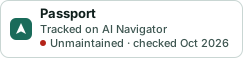
Markdown
[](https://navigateaitools.com/explorer/tool/passport)HTML
<a href="https://navigateaitools.com/explorer/tool/passport"><img src="https://navigateaitools.com/badge/passport.svg" alt="Passport — tracked on AI Navigator" height="58"></a>