 Model Hubs & Serving
Python-ucto
Unicode-aware rule-based tokenizer for various languages in Python.
- Status
- Generally available
- Last checked
- Checked · Oct 10, 2026
- License
- Open source
- Pricing
- Free tier · from $0
What it is
Python-ucto is a Python binding to ucto, providing unicode-aware tokenization across multiple languages. It's essential for text processing tasks requiring precise language support and Unicode handling.
Python-ucto stands out with its robust support for Unicode and multiple languages, making it ideal for projects that need precise tokenization across various linguistic contexts.
When it fits — and when it doesn’t
A good fit for
Projects that require precise Unicode handling and support for multiple languages
Applications needing rule-based tokenization for specific linguistic requirements
Look elsewhere if
Real-time text processing where performance is critical
Scenarios requiring extensive customization beyond the provided rules
Known weaknesses
Each one links to the public issue, changelog or docs page it came from, where we have one.
- 01
Limited documentation and examples
Official repository lacks comprehensive guides, tutorials are sparse and outdated
- 02
Small community and limited support
GitHub issues have slow response times; low activity on forums and Q&A sites
What it does well
Unicode-aware tokenization
Supports multiple languages
Rule-based approach for precise control
Pricing
- Free tier
- YesOpen source — free to use
- Paid from
- $0
- Model
- Flat rate
- Enterprise plan
- No
Pricing not independently confirmed — check the vendor’s page.
Performance benchmarks
How Fast Is It?
Set up Python-ucto
Setup steps, common gotchas and what to check after 30 days.
Get the badge
A small badge for Python-ucto’s README or site: its name, “Tracked on AI Navigator”, and the availability status and check month from this page. It updates as the catalog does.
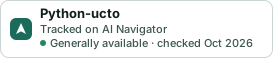
Markdown
[](https://navigateaitools.com/explorer/tool/python-ucto)HTML
<a href="https://navigateaitools.com/explorer/tool/python-ucto"><img src="https://navigateaitools.com/badge/python-ucto.svg" alt="Python-ucto — tracked on AI Navigator" height="58"></a>